

The publishing calendar says Monday, but the campaign still exists as scattered notes: one audience idea, several unchecked details, and no agreement about what belongs in a post, an image, or a fifteen-second clip. That is the situation facing a small dance studio promoting a beginner choreography class. The immediate job is to show dancers how to confirm a usable pulse without treating an estimate as certainty, using the recording version, audible downbeats, count length, meter, and a second-person check. Opening three generators at once will only multiply the ambiguity. The chosen angle is editorial consistency: hold voice and terminology steady across many assets. The aim is one controlled production chain, with human judgment at every handoff.
Start with the task behind the search. A person entering bpm finder wants a usable answer or draft quickly, but the campaign must reveal what evidence, inputs, and judgment make that answer responsible. In this case, the practical outcome is to show dancers how to confirm a usable pulse without treating an estimate as certainty. A narrow audience task keeps the assets honest. Record the exact phrase once in the brief's search-language field, then use natural variants such as tempo check, playlist timing, music draft, audio review, or identification process. Do not introduce other supplied keywords as separate search phrases.
A workable brief answers questions that otherwise return during every revision. Who is making the decision? What should change after the content is consumed? Which claims are supported, and which results are examples? Put the recording version, audible downbeats, count length, meter, and a second-person check in a small evidence ledger for a small dance studio promoting a beginner choreography class, including timings and the date each source was checked. State the boundary of the advice. Define voice through examples: short sentences, plain verbs, no guaranteed outcomes, and no inflated adjectives. Then specify the deliverables by platform, the review owner, the publishing window, and the condition that makes an asset ready. Keep the document short enough that every contributor will actually read it.
Generate copy in stages instead of asking for twenty final posts. First request three message routes: a mistake to avoid, a worked example, and a checklist. Ask each route to use only the brief and to flag missing support rather than filling gaps. Choose one route based on the campaign objective, then produce a long explanation, a compact caption, a hook, and several headline options. Make assumptions visible in the draft. For this topic, a hypothetical warm-up track measured twice before an eight-count storyboard is approved can anchor the explanation. Delete any line that repeats the hook without adding a decision, method, or caution.
Keep campaign inputs editable rather than baking them into every prompt. Store the audience, objective, example, assumptions, and exclusions as separate fields. Structured inputs make review more precise. Freeze them only at final approval.
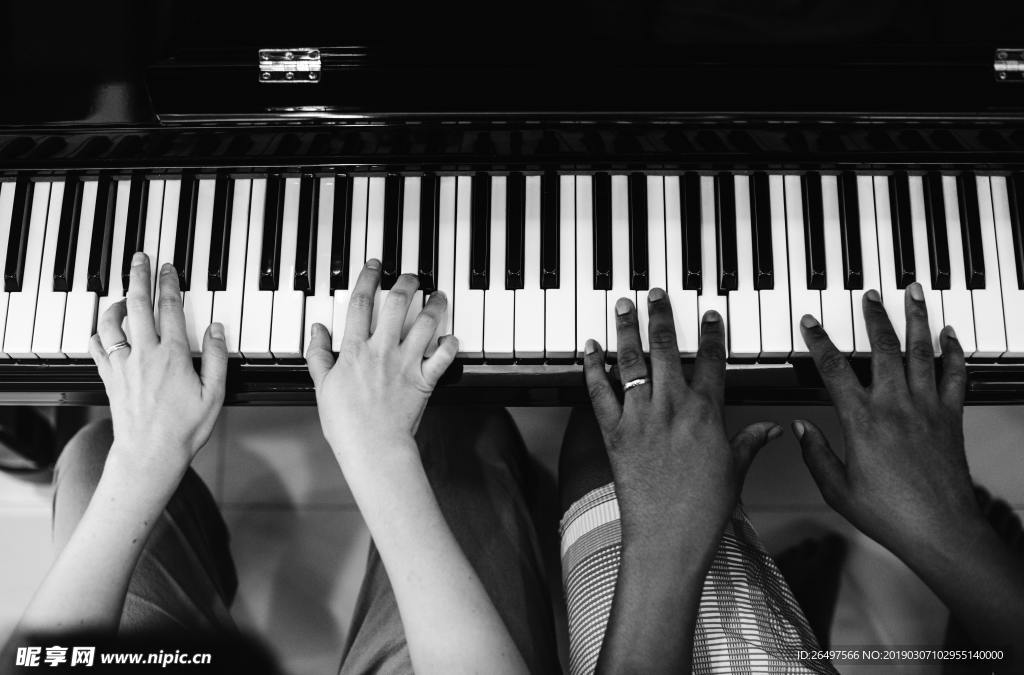
A short clip needs a storyboard before it needs motion. Limit the script to one practical question and arrange five beats: recognizable difficulty, needed inputs, one worked step, one human check, and the decision that follows. A hypothetical warm-up track measured twice before an eight-count storyboard is approved can supply the worked step. Put voiceover, https://mfma.net/ , duration, and visual direction on separate storyboard rows. Use movement to reveal the method. Generate visual fragments rather than a whole polished clip in one pass, then edit the sequence. Inspect continuity, lettering, screen geometry, hands, lip movement, captions, audio levels, and the final frame at normal playback speed.
For images, convert the chosen message into a visual job before writing a prompt. Decide whether the asset must compare, sequence, demonstrate, or summarize. A useful concept here is a hypothetical warm-up track measured twice before an eight-count storyboard is approved. Write a prompt that specifies subject, composition, focal point, background, lighting, color constraints, aspect ratio, and safe space for later text. Add labels manually in the design pass. Request a small set of meaningfully different compositions, not cosmetic color swaps. Check hands, symbols, workflow displays, diagram directions, duplicated objects, and accidental branding at full size. beat counter earns its place only if it makes the lesson faster to grasp.
Platform adaptation is a new edit, not a resize. A text-led network can carry the reasoning as a short thread; an image-led feed needs a strong first panel and a caption that supplies context; a vertical clip needs immediate motion, large captions, and one point; a longer video can retain the derivation and source notes. Protect the meaning while varying the entry point. Rewrite the opening for how people encounter each format. Check crops at common phone sizes, leave interface-safe margins, and read every caption without audio. The campaign should feel related across channels without looking mechanically duplicated.
AI reduces blank-page time, but it also creates specific review work. It may invent a policy, transpose a digit, apply a method to the wrong section, or state an assumption as fact. Across many outputs, it tends to repeat familiar hooks and sentence shapes. Brand voice can drift toward cheerful certainty even when the subject requires restraint. Generated visuals may contain broken text, impossible hands, misleading diagrams, inconsistent objects, or interfaces that resemble real products. A fluent draft still needs evidence. Keep source retrieval, technical detail verification, final wording, typography, and approval with a person. Do not use synthetic variety as a substitute for a distinct editorial point.
Use a review checklist that separates correctness from polish. The correctness pass tests every claim against the ledger, repeats the production decision independently, confirms timings and dates, and checks that an example is not presented as observed behavior. The editorial pass removes repeated conclusions, vague benefits, inflated adjectives, and abrupt tone changes. The visual pass checks crop, contrast, typography, symbols, hands, screens, motion, and caption timing. Have a second person follow the stated method. Finally, compare all formats side by side. When live music BPM finder is corrected, update the brief first and regenerate or edit every affected derivative.
One brief can support many assets only when it remains the campaign's source of truth. For a small dance studio promoting a beginner choreography class, the practical sequence is brief, evidence check, message route, copy, visual plan, storyboard, platform edit, and human approval. Useful speed comes from fewer unresolved decisions. Keep the recording version, audible downbeats, count length, meter, and a second-person check visible, use a hypothetical warm-up track measured twice before an eight-count storyboard is approved as an illustration rather than proof, and revise the brief whenever a correction affects more than one asset. That gives a lean team a repeatable way to publish quickly without handing editorial judgment to the generator. Retain edit-friendly-revision-cue.